

First principles thinking is a problem-solving approach that breaks challenges into their simplest truths and builds solutions from scratch. It's about questioning assumptions, focusing on basics, and avoiding reliance on conventional methods. Elon Musk famously used this to cut rocket costs at SpaceX by analyzing raw materials instead of accepting industry norms. This mindset isn't just for billionaires - it can help you tackle personal finance, workplace issues, and daily decisions.
Key Takeaways:
- Define the problem clearly: Use tools like the Five Whys to identify root causes.
- Question assumptions: Challenge beliefs and test them with evidence.
- Build solutions from scratch: Focus on fundamental truths, not existing methods.
Start small: apply this approach to one issue today. Whether it's budgeting, managing time, or improving health, breaking problems into basics can lead to clearer, more effective solutions.
This Is How The Top 1% Think Using First Principles
What Is First Principles Thinking
First principles thinking is a powerful mental framework that breaks down complex problems into their most basic elements and then rebuilds solutions from the ground up. Instead of accepting existing methods or assumptions, this approach challenges you to question everything to uncover fundamental truths.
The idea has roots in ancient philosophy, with Aristotle emphasizing the importance of understanding the core causes and foundational elements of any subject. He described these as the starting points from which all knowledge originates. This historical perspective highlights how first principles thinking differs from the more common analogical reasoning.
First Principles vs. Analogical Reasoning
Most people naturally lean on analogical reasoning. They look at similar situations, adapt what has worked before, and make incremental changes. While this method is quicker and less mentally taxing, it often limits creativity and innovation.
In contrast, first principles thinking starts from scratch. Elon Musk, a notable advocate of this approach, explains:
"Physics teaches you to reason from first principles rather than by analogy".
Here’s how the two approaches compare:
| First Principles Thinking | Reasoning by Analogy |
|---|---|
| Breaks down assumptions | Builds on past solutions |
| Develops original ideas | Tweaks existing methods |
| Starts with basic truths | Relies on known examples |
| Slower but transformative | Faster but less inventive |
What Are First Principles?
A first principle is a foundational truth or fact that cannot be broken down further or derived from other assumptions. Think of it as the bedrock upon which everything else is built.
For instance, if you’re trying to cut grocery expenses, most people might focus on using coupons or shopping during sales. First principles thinking, however, digs deeper by asking questions like: What do I actually need to eat to stay healthy? What are the cheapest sources of essential nutrients? How much food do I waste versus consume?
By questioning conventional practices, this method often uncovers hidden efficiencies. The strength of first principles lies in its ability to strip away assumptions and focus solely on the essential facts. This approach encourages asking tough questions and challenging widely accepted norms, often leading to groundbreaking solutions.
Why First Principles Thinking Works
First principles thinking is effective because it pushes you to question established assumptions and look beyond conventional wisdom. By starting with the most fundamental truths, you can uncover opportunities others miss and gain a deeper understanding of the problem.
This approach is also a catalyst for innovation. Instead of making minor tweaks, it enables transformative breakthroughs. A great example is SpaceX, which drastically reduced rocket launch costs - by nearly 90% - through a complete rethinking of the manufacturing process.
Beyond fostering innovation, first principles thinking sharpens problem-solving skills. It trains you to approach challenges with fresh eyes, free from the constraints of traditional thinking.
As Elon Musk puts it:
"I think people's thinking process is too bound by convention or analogy to prior experiences. It's rare that people try to think of something on a first principles basis".
How to Apply First Principles Thinking: 3 Steps
First principles thinking is about breaking problems down to their most basic truths and building solutions from the ground up. To make this approach part of your daily decision-making, follow these three steps. As Albert Einstein famously said:
"If I had an hour to solve a problem, I'd spend 55 minutes thinking about the problem and 5 minutes thinking about solutions".
The idea is simple: deeply understanding a problem leads to effective and sometimes groundbreaking solutions. Here's how you can apply this method.
Step 1: Define the Problem Clearly
To solve any problem, you first need to define it as precisely as possible. Instead of jumping to solutions, strip the issue down to its core. For instance, if you think, "I need more money", ask yourself: is it about low income, overspending, or ineffective budgeting? Similarly, a vague problem like "work is stressful" could be reframed as, "I’m overwhelmed by managing 200+ emails daily without a system to prioritize urgent tasks."
The "Five Whys" technique is a powerful tool to uncover the root cause of your problem. Here’s an example:
- Problem: I’m always late to meetings.
- Why? I underestimate travel time.
- Why? I don’t consider traffic or parking delays.
- Why? I rely on overly optimistic time estimates.
- Why? I prefer not to arrive too early.
- Why? I see waiting as unproductive.
In this case, the root issue may not be poor time management but a mindset about productivity. Writing down your assumptions about the problem can also help uncover hidden beliefs that might be holding you back.
Once the problem is clearly defined, it’s time to challenge your assumptions in Step 2.
Step 2: Question Your Assumptions
After defining the problem, take a hard look at your assumptions. Why do you believe what you believe? Are your views based on facts, or are they outdated or biased? This step requires you to question everything and validate your beliefs with evidence.
For example, if you assume that working longer hours leads to better results, test it. Track your productivity and you might discover that shorter, focused work sessions are actually more effective. Seek input from others - someone outside the situation may see things more clearly than you do. In workplace conflicts, for instance, asking questions to clarify intentions can prevent misunderstandings.
To guide your analysis, ask yourself:
- What do I believe about this process or situation?
- What evidence supports this belief?
- Has anything changed since I last evaluated this assumption?
Adopting a "what if" mindset can open new doors. As Dr. Diane Hamilton points out:
"Assumptions are silent blockers that stifle curiosity, innovation, and growth. They keep everyone stuck in old patterns and outdated beliefs".
Once you’ve challenged your assumptions, you’re ready to build solutions from the ground up in Step 3.
Step 3: Build Solutions from Scratch
Now that you’ve defined the problem and questioned your assumptions, it’s time to construct a solution. Start fresh by focusing on the fundamental truths you uncovered earlier. Forget conventional methods and rethink what’s essential. A great example of this is SpaceX, which cut rocket costs by challenging the assumption that rockets couldn’t be reused.
Instead of tweaking existing solutions, piece together the basic elements you truly need. For instance, if your goal is to improve fitness, break it down: you need cardiovascular activity, strength training, and consistency. You might realize that bodyweight exercises, walking, and a simple home workout setup are more effective and convenient than a gym membership.
Test your ideas on a small scale before fully committing. This trial-and-error approach lets you fine-tune your solution and ensures it fits your unique circumstances. Documenting your process not only helps you learn but also strengthens your ability to apply first principles thinking in the future.
Making First Principles Thinking a Daily Habit
Building first principles thinking into your daily routine doesn’t have to be overwhelming. Start small, and let consistency do the heavy lifting. Research shows that regular practice helps break down assumptions into actionable knowledge, opening the door to fresh solutions.
The trick lies in setting up reliable methods to challenge assumptions. By asking the right questions and using structured tools, you can gradually train your mind to approach problems with clarity and purpose.
Daily Journaling and Reflection
Journaling is a powerful way to sharpen first principles thinking. It creates a feedback loop that uncovers hidden assumptions and helps you question your thought process.
Begin with simple prompts to guide your reflections. Each day, ask yourself questions like, "What assumptions did I rely on today?" or "What problems am I facing that I haven’t broken down to their core elements?" Write down your thoughts and challenge the reasoning behind your decisions. As Joan Didion once put it:
"I don't know what I think until I write it down."
Push yourself further by systematically questioning your beliefs. For instance, ask, "Why do I believe this?" or "What evidence supports this assumption?". This habit encourages you to dig for basic truths instead of settling for superficial answers.
A study on evidence-based psychotherapies revealed that professionals who kept reflective journals every few months gained deeper insights into their decision-making and clinical applications. You can apply the same principle to your personal and professional challenges, using journaling to refine your thinking over time.
Schedule Time for Question-Storming
In addition to journaling, set aside time for what’s called question-storming. Unlike brainstorming, where the focus is on generating solutions, question-storming shifts the focus to developing insightful questions about a problem. This approach helps you uncover deeper layers of understanding before jumping to conclusions.
Dedicate 15–20 minutes daily to listing questions about a specific challenge - without trying to answer them immediately. Questions like, "What evidence supports my current approach?" or "What happens if I remove this constraint entirely?" can lead to unexpected insights.
To make this process easier, lean on established methods like Socratic Questioning, Elon Musk’s First Principles Reasoning, or the Five Whys Framework. These tools guide your questioning and ensure you’re addressing all critical aspects. Using templates can also help you stick to this habit with less effort.
Leverage Grow The Mind Resources
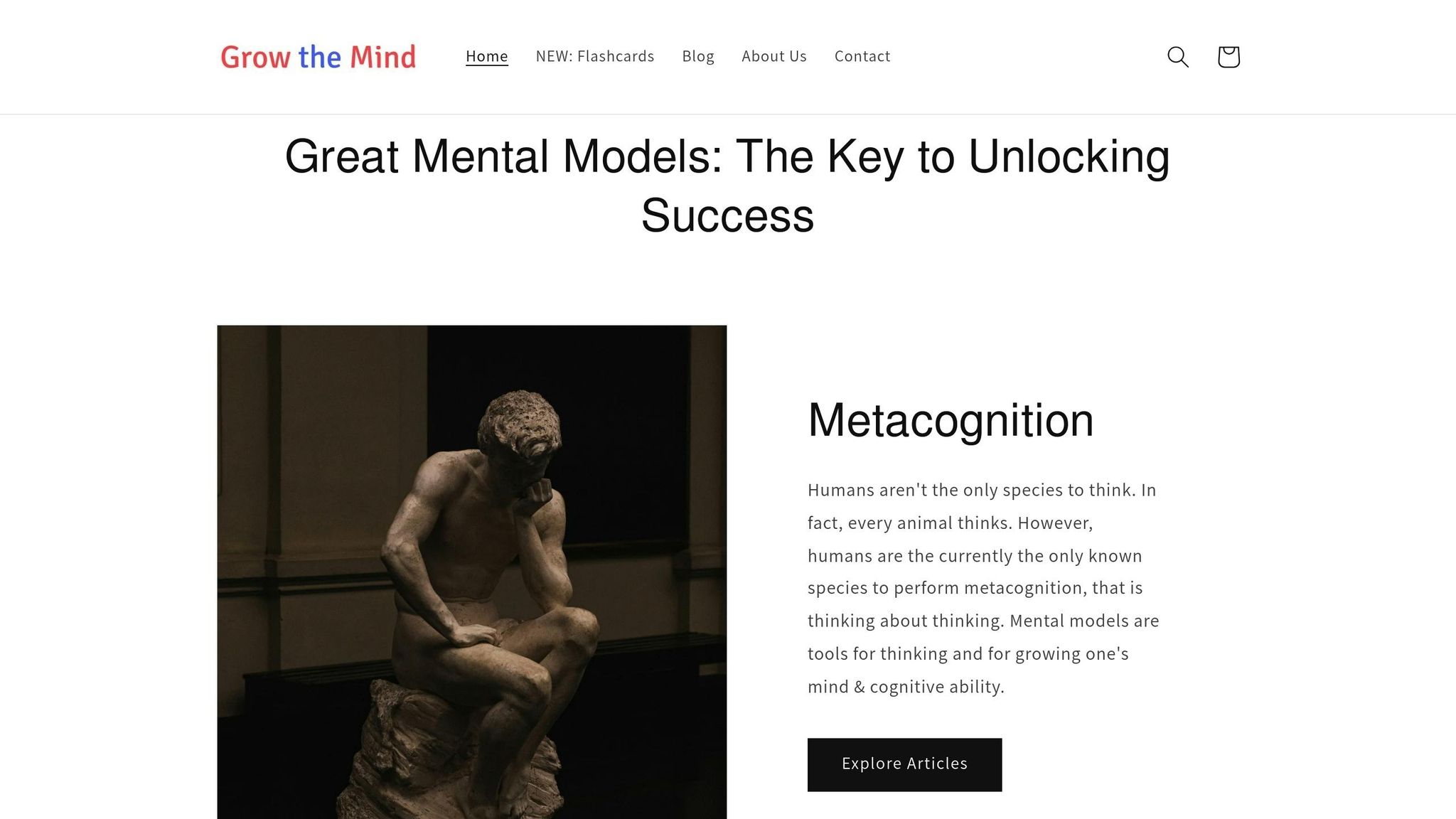
To deepen your practice, consider using Grow The Mind’s 42 mental models flashcard deck. These cards are designed to help you approach problems from different perspectives and identify when you’re relying on assumptions rather than fundamental truths.
Incorporate the flashcards into your routine by reviewing 2–3 models each morning. Throughout the day, consciously apply these mental models to decisions you face. The cards are also great for group discussions or team problem-solving, where diverse viewpoints can help uncover blind spots.
Each mental model offers a unique way to analyze challenges, helping you sidestep conventional thinking. Track your progress by noting how these frameworks influence your decisions and problem-solving in your journal. Combining structured tools with reflective practice creates a strong foundation for making first principles thinking a natural part of your approach to challenges.
sbb-itb-90db98a
First Principles Thinking in Common Situations
First principles thinking shines brightest when applied to everyday challenges. Instead of blindly following conventional wisdom or established practices, this method encourages breaking problems down to their basic components and building smarter solutions from the ground up. Let’s explore how this approach can transform common areas of life.
Personal Finance Decisions
When it comes to managing money, many people rely on advice from financial experts or stick to generic budgeting templates. First principles thinking pushes you to question the why behind your financial choices. At its core, personal finance is about the decisions you make to earn, budget, save, spend, and give your money. Instead of adopting someone else’s plan, think about what financial security means to you, and focus on the essentials: budgeting, saving, investing, managing debt, and planning for retirement.
Take budgeting as an example. Rather than using a complicated app or system, ask yourself: What is a budget supposed to achieve? The goal is simple - balance your income and expenses. A zero-based budget, where every dollar is assigned a purpose, can help you achieve this balance.
For emergency savings, consider the standard advice of saving 3–6 months of expenses. Instead of accepting this at face value, reflect on the kinds of emergencies you might face and adjust your savings goal to fit your unique situation.
When it comes to investing, this mindset can help you cut through the noise. Instead of chasing popular stock tips, ask: What is the purpose of investing? At its heart, investing is about growing wealth over time to secure your future. Remember, financial literacy is 20% knowledge and 80% behavior. The key isn’t mastering every concept - it’s consistently applying the basics you understand.
Workplace Problems
In the workplace, challenges are often met with quick fixes that fail to address deeper issues. First principles thinking encourages you to dig beneath the surface to create lasting solutions.
For example, when dealing with team collaboration problems, managers often introduce new communication tools or schedule more meetings. But what does effective collaboration really require? At its foundation, successful teamwork depends on a shared understanding of goals, clear communication, and aligned incentives.
A healthcare example highlights this approach. Instead of prescribing medication to ease a patient’s headaches, doctors can use first principles thinking to examine root causes like sleep patterns, stress levels, or diet. Similarly, when evaluating outdated procedures, ask: What is the simplest way to achieve the desired outcome? Elon Musk once said:
"We should not spend time on optimizing something that should not even exist".
In industries like manufacturing and construction, breaking down problems into smaller components has led to impressive results. Teams have reported up to 80% faster assembly times and a 25% reduction in operational costs. By focusing on the core elements of a challenge, you can estimate effort more accurately and create sustainable solutions.
Daily Life Choices
Everyday decisions about health, time, and lifestyle can easily become overwhelming, thanks to conflicting advice and trends. First principles thinking helps cut through the noise by focusing on what truly matters.
For health and fitness, instead of chasing the latest diet or workout trend, ask: What does my body actually need to thrive? What’s realistic for me right now, and what outcomes are most important?. A great example comes from Niall McKeever, who manages type 1 diabetes. By questioning standard protocols, he discovered a way to keep his body in an insulin-sensitive state. This shift reduced his insulin use from 30 units a day to just 3, improving his energy, blood sugar control, and emotional stability.
Time management is another area ripe for this approach. Rather than following generic productivity systems, ask yourself: What do I want more time for? Which tasks drive my goals forward, and what activities are just draining my energy?. These questions can help you set priorities and design a system that truly fits your life.
Common Obstacles and How to Overcome Them
Now that you’ve explored practical strategies, let’s tackle the common obstacles that can make applying first principles thinking a challenge. Our brains are naturally inclined to take shortcuts, lean on familiar patterns, and avoid the mental effort it takes to break down complex problems. Understanding these hurdles - and knowing how to navigate around them - is key to making first principles thinking a regular part of your problem-solving toolkit.
Spotting Cognitive Biases
Cognitive biases are like invisible barriers that distort our thinking and lead to flawed decisions. These mental shortcuts can block the deep questioning needed to uncover core truths. As David Susman, PhD, explains:
"One of the biggest challenges regarding cognitive biases is that it's often hard to recognize our own biases or those of others".
Take confirmation bias, for example. This bias nudges us to focus only on information that supports what we already believe, making it harder to challenge our assumptions. When dissecting a problem, you might unconsciously overlook evidence that contradicts your initial understanding.
Then there’s anchoring bias, which ties our thinking too tightly to the first piece of information we encounter. This can trap you in conventional solutions before you’ve even explored the fundamentals.
The sunk cost fallacy is another mental trap. Once you’ve invested time, effort, or resources into a particular approach, it becomes harder to step back and question whether that path still makes sense.
Interestingly, research shows that debiasing training programs can reduce the impact of cognitive biases by 29%. The first step is awareness. Acknowledge that biases exist and can cloud your judgment. When analyzing a problem, actively seek out disconfirming evidence - ask yourself questions like, "What am I overlooking?" or "How would someone with the opposite perspective view this?" Practicing intellectual humility and staying open to being wrong can also help.
By recognizing these biases, you’ll be better equipped to question assumptions and think more critically.
Developing Self-Awareness
Self-awareness is the cornerstone of first principles thinking. Without it, you’re likely operating on autopilot, driven by hidden assumptions you haven’t even noticed. Many of our beliefs and thought patterns exist below the surface of our conscious awareness.
One way to sharpen self-awareness is through regular journaling. Writing down your thoughts forces you to confront and challenge hidden assumptions. Over time, this habit strengthens your ability to question deeply.
Another powerful tool is Socratic questioning. This disciplined approach helps you clarify your thinking, challenge assumptions, and consider alternative perspectives. For instance, when facing a problem, ask yourself: "Why do I believe this?" or "What evidence supports this idea?"
Jensen Huang, the founder and CEO of NVIDIA, is a great example of this mindset:
"You can learn how something can be done and then go back to first principles and ask yourself, 'Given the conditions today, given my motivation, given the instruments, the tools, given how things have changed, how would I redo this? How would I reinvent this whole thing?'"
Diverse perspectives can also be eye-opening. Invite input from people outside your field or those with no prior experience in the topic. Their fresh perspectives might expose assumptions you didn’t even realize you were making.
Techniques like journaling, Socratic questioning, and simplifying problems to their basics all enhance self-awareness. For example, try explaining a complex problem as if you’re talking to a child. This forces you to strip away jargon and focus on the core elements.
Using Mental Models and Frameworks
Mental models and frameworks are like roadmaps for applying first principles thinking. They provide structure, helping you stay focused as you break down problems.
One widely used framework is the 5 Whys technique. By repeatedly asking "Why?" you can peel back layers of assumptions to get to the root of an issue. Beyond this, ask yourself questions like: "What are the essential components of this problem?" or "What happens if I discard this assumption entirely?"
Richard Feynman’s advice is a timeless reminder:
"The first principle is that you must not fool yourself - and you are the easiest person to fool".
Challenge every piece of accepted knowledge. Don’t assume something is true just because it’s commonly believed or endorsed by an authority figure. Instead, dig deeper to understand the reasoning behind it.
Engaging in discussions with others is another effective way to refine your thinking. Explaining your reasoning to someone else often reveals gaps in your logic that you might not notice on your own. As Carl Sagan famously said:
"Science is a way of thinking much more than it is a body of knowledge".
Resources like Grow The Mind’s mental models can offer additional tools and techniques to support your practice. These structured approaches help you break down complex problems and question assumptions systematically.
Start Using First Principles Thinking Today
Incorporating first principles thinking into your life doesn’t require a massive overhaul. Instead, it’s about making small, intentional changes to how you approach problems. As Elon Musk puts it:
"We get through life by reasoning by analogy, which essentially means copying what other people do with slight variations. And you have to do that. Otherwise, mentally, you wouldn't be able to get through the day. But when you want to do something new, you have to apply the first-principles approach".
Here’s how you can start applying this mindset right now.
Tackle one small problem today. Look at something you deal with regularly - maybe a recurring issue at work or a personal decision you’ve been avoiding. Begin by listing your assumptions about the problem. Then, break it down into its most basic elements. Ask yourself: What are the core truths here? What evidence supports my assumptions? What if I ignored conventional wisdom altogether? This process can help uncover solutions that might otherwise be overlooked.
One practical way to dive deeper is by using the Five Whys framework. When faced with any issue, ask "why" five times in a row to peel back the layers and get to the root cause. This method pushes you beyond surface-level thinking and forces you to identify the underlying principles driving the problem.
Make questioning a daily habit. Create simple templates to guide your thought process. For example, include prompts like: "What assumptions am I making?" "What evidence supports these assumptions?" "How would someone with an opposing view see this?" Keeping these questions handy can make it easier to consistently apply first principles thinking in your everyday life.
Jensen Huang suggests rethinking tasks entirely based on current conditions and available tools. This fresh perspective encourages you to rebuild processes from the ground up, rather than relying on outdated methods.
Of course, this approach takes time and effort. As Ozan Varol, a former rocket scientist and author, explains:
"The primary downside [to first-principles thinking] is it's really difficult. [...] First-principles thinking, if you take it to an extreme, can be really inefficient, because we learn by emulating other people - [everything] from learning how to walk, learning how to talk, comes from copying others and modeling others".
The key is consistency, not perfection. Start small, practice regularly, and gradually apply this way of thinking to bigger, more complex challenges. Over time, first principles thinking will become a natural part of how you approach decisions and solve problems. By integrating these simple strategies into your routine, you’ll strengthen your ability to think critically and approach challenges with fresh insight.
FAQs
How can I start using first principles thinking in my daily life without feeling overwhelmed?
How to Start Using First Principles Thinking
If you're ready to try first principles thinking but feel unsure where to begin, the key is to make it simple. Break problems down into their most basic elements. Focus on uncovering core truths, and steer clear of assumptions. Ask yourself questions like: What do I absolutely know to be true? or Why is this the case? These questions help you get to the root of the issue.
Start small. Apply this way of thinking to everyday decisions - like how to structure your day or tackle a minor work issue. As you get more comfortable, you can use it for bigger, more complex challenges. The goal is to stay curious and build confidence gradually. By easing into it, you can make first principles thinking a natural part of your problem-solving process without feeling overwhelmed.
How can I use first principles thinking to tackle common personal finance challenges?
First principles thinking can be a game-changer when tackling personal finance challenges. By stripping issues down to their most basic truths, you can rebuild practical solutions from the ground up. Take the core idea of spending less than you earn - a simple yet powerful principle. From this foundation, you can develop actionable steps like tracking your expenses, pinpointing areas where you can cut back, and finding opportunities to boost your income.
It also encourages you to question conventional wisdom about topics like debt and savings. Instead of blindly following generic advice, analyze your financial choices based on the essentials: your income, expenses, and long-term goals. This method empowers you to create tailored strategies that resonate with your specific needs and priorities, rather than relying on one-size-fits-all solutions.
What makes first principles thinking different from traditional problem-solving, and why is it better for driving innovation?
First principles thinking is all about stripping problems down to their most basic truths and building solutions from scratch. Instead of leaning on assumptions, past habits, or conventional methods, this approach pushes you to question everything. By doing so, it opens the door to solutions that go beyond the usual limits of traditional thinking.
What sets this apart from standard problem-solving is its refusal to stick to established patterns or step-by-step routines. First principles thinking encourages you to reimagine challenges from the ground up, paving the way for fresh ideas and breaking free from the constraints of outdated beliefs. It's a powerful mindset for tackling tough problems, whether you're navigating personal hurdles or addressing professional roadblocks.